Clinton Appliance Repair Co treats every oven as evidence: codes read, temperatures and currents measured, and the verdict delivered in plain language with one figure attached.
Cooking appliances fail in ways you can taste: biscuits browned on one side, a roast that takes an extra hour, a burner that clicks and never lights. We repair gas and electric ovens and ranges, freestanding, slide in, and dual fuel, and we test with a thermometer rather than a promise. Around Clinton, oven trouble rarely announces itself politely. It starts as a sound, a smell, a few degrees, and becomes a service call.
There is a Clinton pattern to the work, and it starts with the buildings. Clinton is a homeowner community of single family subdivisions built from the 1970s onward, with larger colonials toward Rosaryville and Woodyard, and appliances that are maintained and repaired rather than quickly replaced. Machines installed in the same building wave reach the same wear points in the same seasons, which is why one street can produce five similar calls in a month.
Oven and Range Repair Problems We Diagnose and Repair in Clinton
Temperature and baking faults
Broilers fail separately from the bake system, and on electric ranges the broil element is a straightforward test and replacement. Uneven baking with a working sensor points lower: a bake element with a blistered section, or a gas bake burner with clogged ports along one side. Steady temperature error is the friendliest oven fault: a drifting sensor or a control that needs calibration, verified with a thermometer across three test cycles. An oven that heats once and then fades during a long bake is often a weak igniter on gas models, drawing too little current to hold the gas valve open. Clinton's 1970s subdivisions are reaching the age where whole streets call in the same season.
Burners, igniters, and cooktop faults
Induction and radiant tops report their own errors, and a dead zone is tested at the element and the board before either is condemned. A coil that only knows full blast has typically lost its control switch; the element tests fine and the switch is the repair. Clicking with no flame is usually ignition, not gas: a spark electrode coated in boil over residue, or ports that need cleaning before the spark can catch. Garage freezers out here live hot and work hard, and their verdicts are judged by that life.
Doors, controls, and safety
An oven door that will not seal leaks heat and money; hinges bend, springs tire, and gaskets compress flat with age. After a self clean cycle, a door that stays locked is usually a lock assembly or its switch reporting wrong, and it is among the most routine calls we run. On gas models we leak test connections after any burner or valve work, because a repair that cooks well but seeps gas is not a repair at all. Repairs are proven under load here before anyone calls them finished.
How We Diagnose Oven and Range Repair in Clinton
We test temperature the way bakers experience it: a thermometer in the cavity, readings at preheat and across two full cycles, plus element and igniter current draw on the meter. Well water on Clinton's edges and county water at its core leave different signatures, and we read both.
Recent Project: Oven and Range Repair in Upper Marlboro
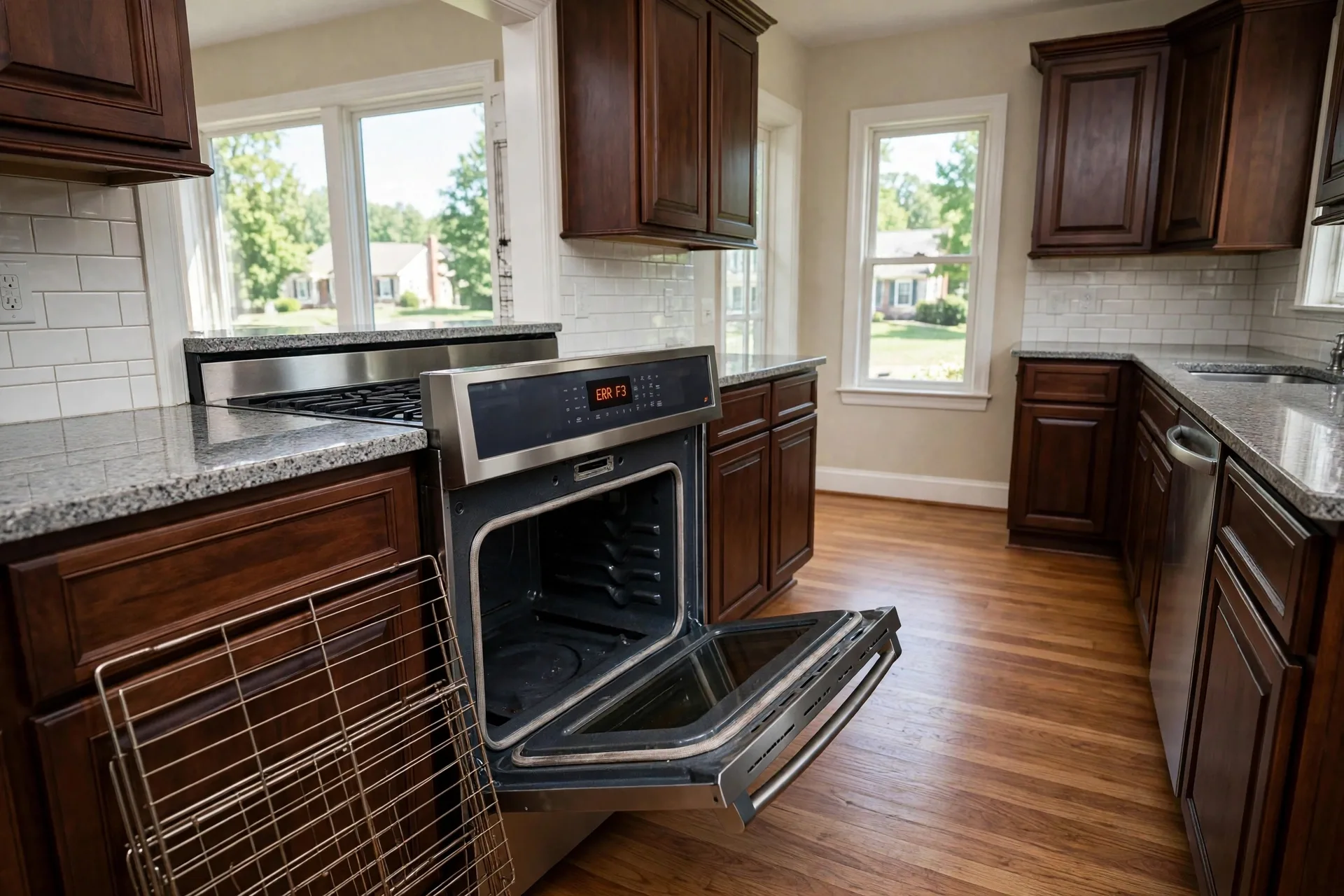
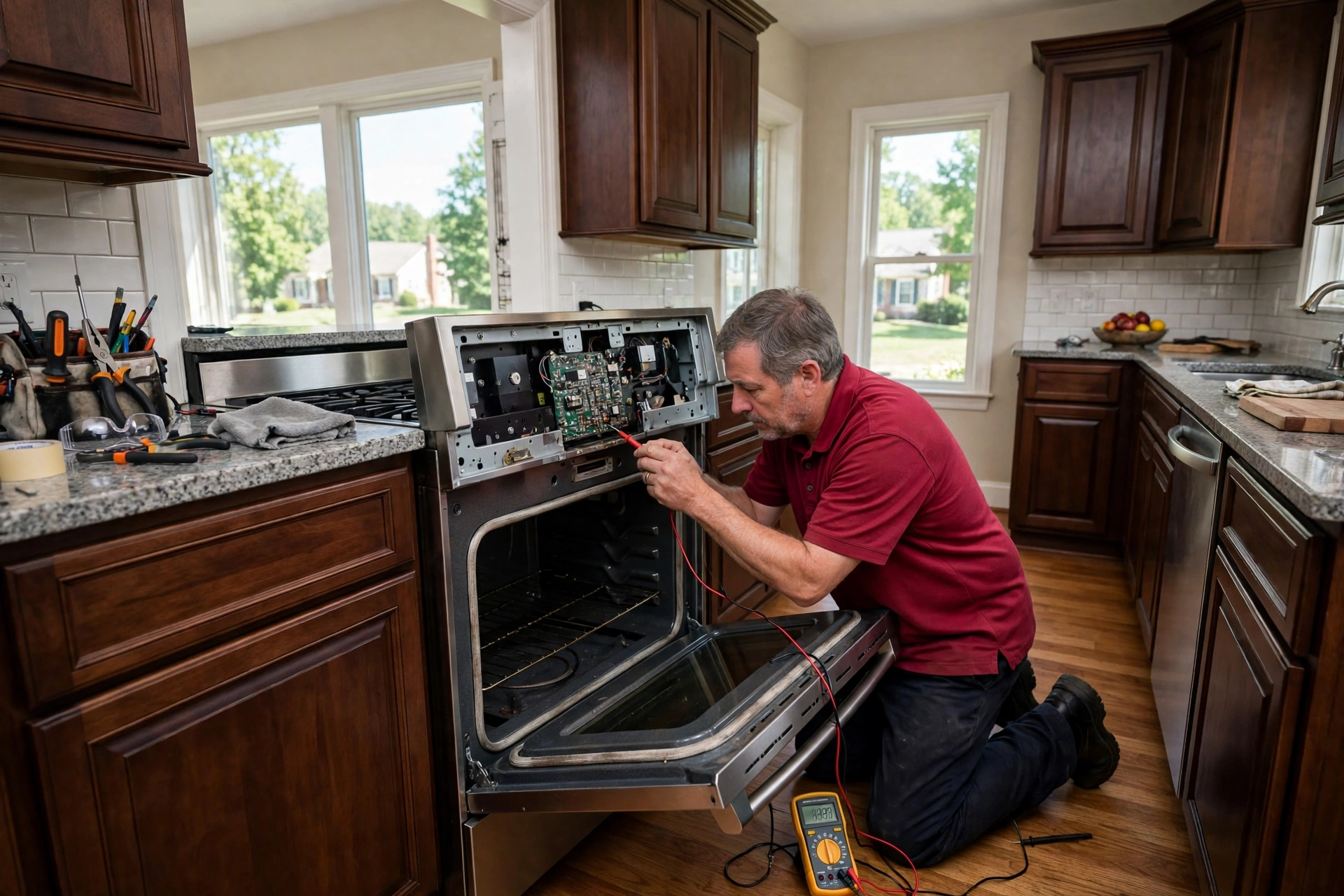
A call from Upper Marlboro: Electric oven running forty degrees cold. Testing found the temperature sensor had drifted out of range. We fitted a new sensor, recalibrated the control, and verified three test cycles. Camp Springs and Temple Hills work routes through the same written standard as Clinton itself.
Oven and Range Repair Cost in Clinton, MD
Published guides average cooking appliance repair near $214, and the honest band on this page runs $165 to $380: igniters and sensors at the low end, control boards and door assemblies at the top. One figure is quoted in writing after diagnosis, and the diagnostic fee folds into the repair when you proceed, which is the arrangement the published guides describe. Rosaryville and Woodyard area colonials run big kitchens that owners repair as a matter of policy.
Why Clinton Calls Clinton Appliance Repair Co for Oven and Range Repair
Cooking faults hide inside averages: an oven can read 350 on the display and hold 310 in the cavity. We quote from thermometer readings and current draw, so the repair targets the part that is actually lying to you. If the repair stops making sense at any point in the diagnosis, you hear it at that point, with the numbers. That rule has cost us jobs and earned us the neighborhood, and it is not changing. Clinton landlords get findings in writing, per unit, that hold up between tenancies.
Request an Appliance Repair Quote in Clinton, MD
Tell us what the oven is doing, or not doing, on the form and we will take it from there: diagnosis first, one written figure, and the repair done properly.
Frequently Asked Questions
Why does my oven take so long to preheat?
On gas ranges the weak igniter is the usual story; on electric, a bake element with a dead section. Either way the fix starts with testing, because the same symptom has two different price tags. Rosaryville and Woodyard area colonials run big kitchens that owners repair as a matter of policy.
My gas burner clicks but will not light. What is wrong?
Start with the simple causes: debris in the ports and a coated electrode stop more burners than failed parts do. If cleaning does not restore the spark, we test the module and the switch. Well water on Clinton's edges and county water at its core leave different signatures, and we read both.
Is a drifting oven temperature worth repairing?
Yes, in most cases. A sensor or calibration repair is one of the least expensive on this page, and it transforms baking more than any other single fix. We verify the drift with a thermometer first so you know the size of the problem. Summer storm flickers along Branch Avenue age control boards across neighborhoods at once.
What does the diagnostic visit cost?
The visit runs $75 to $125 in the published guides, credited toward the repair in the usual arrangement, and for an oven it includes a thermometer check across real cycles. Older machines are common in Clinton and usually worth the diagnosis; the testing decides.
Can you repair a oven door that will not close properly?
Yes. Doors are rebuilt with hinges, springs, and gaskets as needed, and the seal is checked with the oven hot. A door that seals restores preheat times and stops the control panel cooking itself. Clinton landlords get findings in writing, per unit, that hold up between tenancies.
Do you repair dual fuel ranges?
Dual fuel is covered on this page: the gas side is tested for ignition and valve function, the electric oven side for element and sensor performance, each with its own measurements. Camp Springs and Temple Hills work routes through the same written standard as Clinton itself.